
Advanced dental treatment facilities in Hollywood, FL
Good treatment starts with accurate information. Our office uses digital radiographs, three-dimensional scanning and an in-office CT scanner, so Dr. Tamara Rojas can see what an exam alone can’t and plan your case before treatment begins.
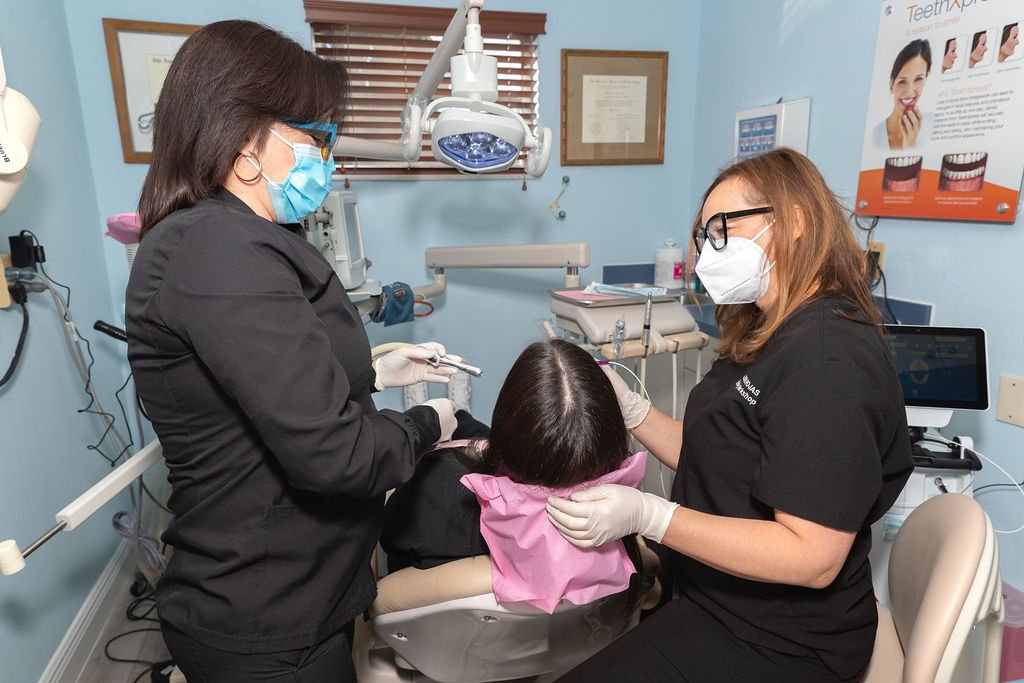 Planned before treatment begins
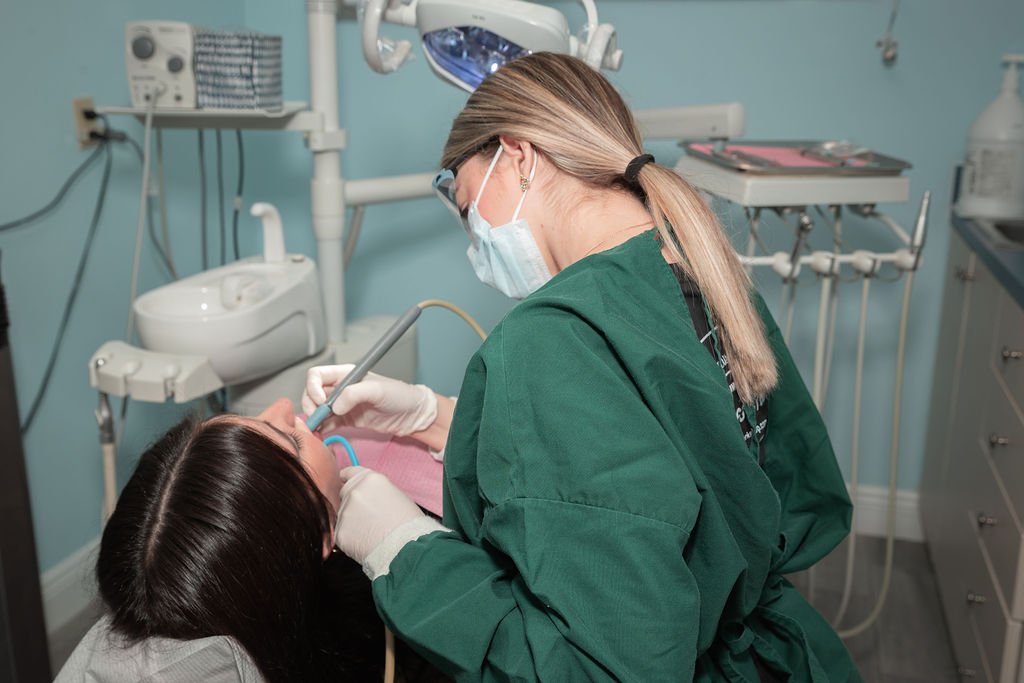
Equipment that improves the information behind your plan.
Each tool has one job: give Dr. Rojas the most accurate picture of your teeth, gums and bone she can get.
Digital x-rays of your teeth and the bone around them, used to diagnose gum disease and track changes over time.
A three-dimensional view of the teeth and jaws, used where a flat x-ray doesn’t show enough.
Lets us work completely digitally — planning your implant case outside your mouth, from start to finish, before treatment day.
Easier communication with your general dentist, appointment confirmations by text and email, and reminders about care you still need.
Seeing below the gumline — and inside the bone.
Gum disease and bone loss are often invisible when you look in a mirror. The American Dental Association notes that dental x-rays can reveal damage or disease not visible during a dental exam, and that new patients may have x-rays taken to set a baseline for spotting changes later. The ADA also recommends taking x-rays only when they will provide necessary diagnostic information. (ADA MouthHealthy: X-rays)
For dental implants and full-arch treatment like TeethXpress®, a flat image isn’t always enough. The U.S. Food and Drug Administration describes dental cone-beam CT as a 3D scan of the teeth and jaws used for applications such as dental implant planning. It also notes that a dental CBCT exam typically delivers more radiation than conventional dental x-rays but generally less than other CT exams, and that it should be used only when necessary for diagnosis or treatment. (FDA: Dental Cone-beam Computed Tomography)
In practice, that means you can ask us why a scan is being recommended and what it will show. With a 3D scan, Dr. Rojas can measure the bone where an implant would go and plan its position before treatment, which also tells her in advance whether a bone graft might be needed. See our materials and products for how grafts are handled.
Treatments that rely on accurate imaging.
Dental implants
Implant placement, removal and repair, planned digitally before treatment.
Dental implantsGum disease treatment
Radiographs show bone loss around teeth that a gum exam alone can miss.
Periodontal therapyOral surgery & grafts
Extractions and bone and soft-tissue grafts planned around what the images show.
Oral surgeryNervous about treatment? We offer IV, nitrous oxide and oral sedation. Learn more about Dr. Rojas or return to our office.
Imaging & technology questions
Why does a periodontist take x-rays?+
X-rays show the bone that holds your teeth in place, so they can reveal bone loss and other problems that aren’t visible during an exam. For new patients they also create a baseline for comparing later.
Do I need a CT scan for a dental implant?+
Not every case needs one. A 3D scan is used when it adds information that matters for planning, such as the amount of bone where an implant would go. Ask us why a scan is recommended for you.
How much radiation does a dental CT scan use?+
According to the FDA, a dental cone-beam CT exam typically delivers more radiation than conventional dental x-rays but generally less than other CT exams. That’s why it should be used only when necessary for diagnosis or treatment.
Can you share my records with my dentist?+
Yes. Our records are digital and paperless, which makes it easier to communicate with your general dentist about your care.
Get a plan built on accurate information.
Book an evaluation with board-certified periodontist Dr. Tamara Rojas in Hollywood, FL — for gum concerns, implants or a second opinion.