
Periodontal Treatment in Hollywood, FL
When a deep cleaning isn’t enough — or gums have receded, bone has been lost, or the gumline is uneven — board-certified periodontist Dr. Tamara Rojas uses surgical and regenerative procedures to rebuild the support around your teeth.
 Surgical & regenerative care
Not sure which treatment you need?
Most gum problems start with a non-surgical plan. This page covers what comes next.
Bleeding or swollen gums? Start here.
Gum evaluation, deep cleaning and maintenance — the first steps for gum disease.
Periodontal therapyAsking about laser treatment?
How the LANAP® laser protocol works and what the evidence says.
LANAP® protocolMissing a tooth?
Grafting often goes hand in hand with implants. See how Dr. Rojas plans and places dental implants.
Dental implantsAdvanced periodontal procedures, explained.
Descriptions follow the American Academy of Periodontology (AAP). Dr. Rojas will tell you which, if any, fit your case.
Sources: AAP — Surgical Procedures · AAP — Cosmetic Procedures · Cleveland Clinic — Dental Bone Graft.
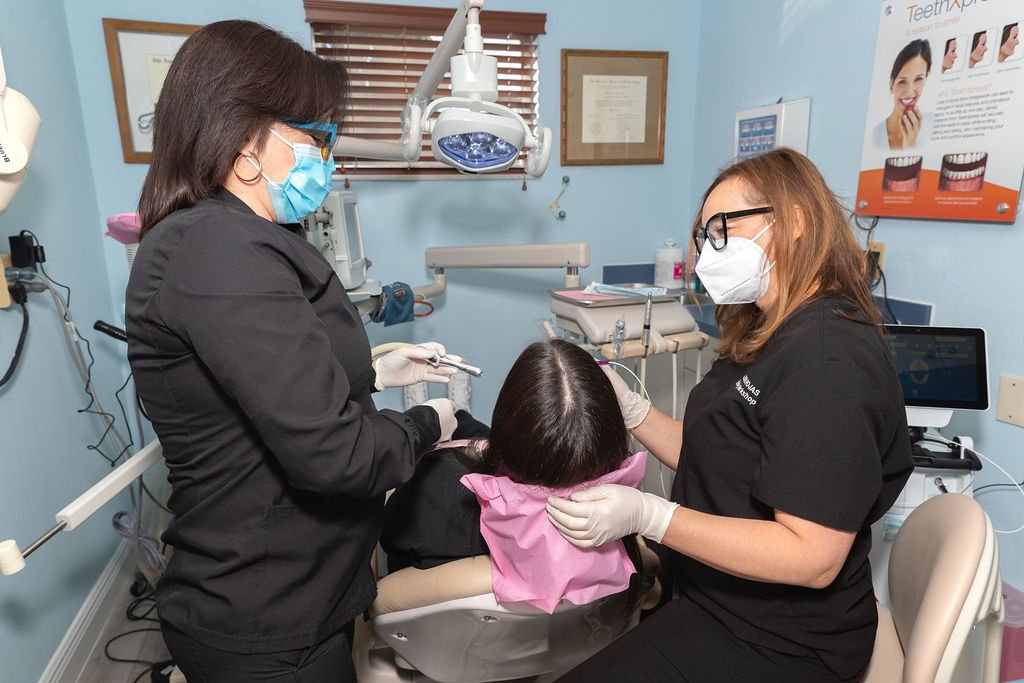
From consultation to healed gums.
We chart pocket depths and gum levels and review x-rays, so any surgery is based on what we actually find.
You’ll see the options, why each one is recommended, and an estimate. Our office manager checks your insurance and financing.
The area is numbed, and IV, nitrous oxide or oral sedation is available. Our assistants are trained in surgery support and pain management.
We give you aftercare instructions and check the area at follow-up visits until it has healed.
Periodontal maintenance visits, together with care from your general dentist, protect the work long term.
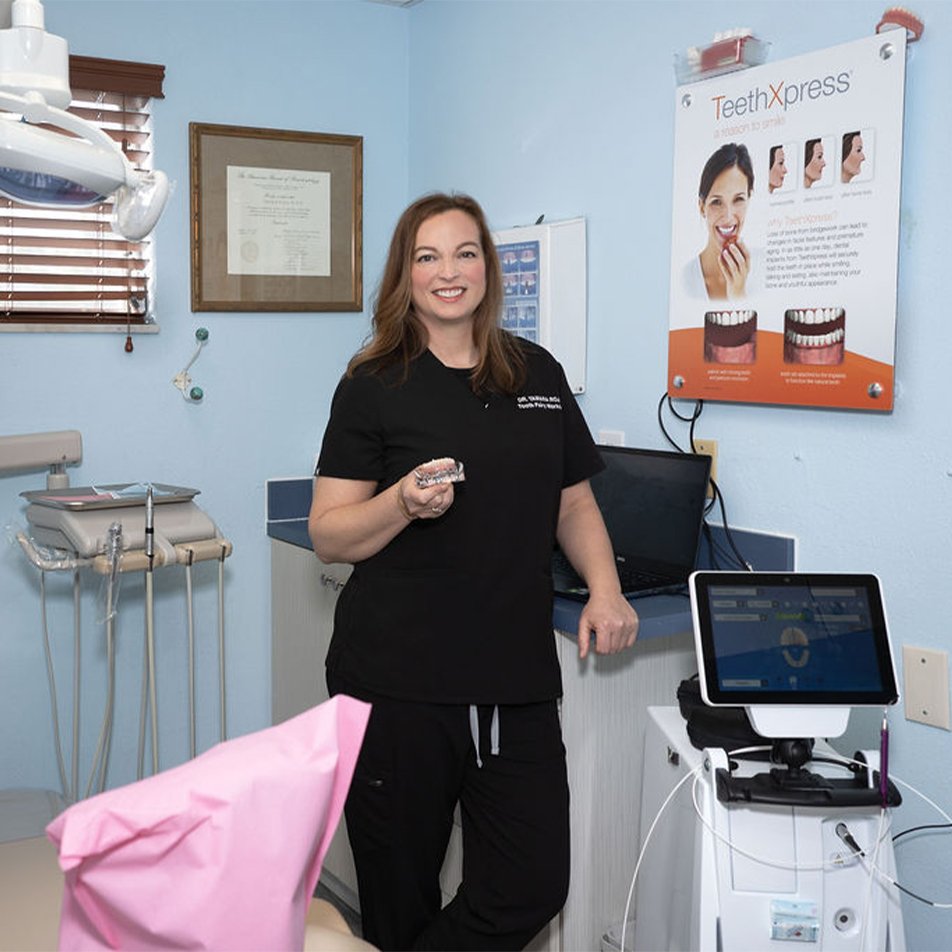
Surgery is a next step, not a starting point. I recommend it only when the measurements tell me the gentler options haven’t done enough, or when something — like recession or bone loss — can’t be fixed any other way.
Before any procedure you’ll see what I see, understand why I’m recommending it, and know the cost. If you’re nervous, tell us. That’s exactly why I trained in IV and nitrous sedation.
Dr. Tamara Rojas, D.M.D. · Board-Certified Periodontist · Read her background
Why some gums need more than a deep cleaning.
Gum disease destroys the gum and bone that hold teeth in place and leaves pockets around them. The deeper a pocket gets, the more bacteria it holds and the harder it is to clean at home or at a routine visit. The AAP notes that many patients need no further treatment after scaling and root planing, but when non-surgical treatment doesn’t achieve healthy gums, a periodontist may recommend surgery. (AAP: Non-Surgical Treatments)
Pocket reduction surgery makes those spaces smaller and easier to keep clean. According to the AAP, regenerative procedures can partially reverse the damage. For some deep pockets, the LANAP® laser protocol is another option Dr. Rojas may discuss. (AAP: Surgical Procedures)
Not every procedure is about disease. Grafts can cover roots exposed by recession, and crown lengthening can even out a “gummy” smile or uneven gumline.
Recovery. Healing depends on the procedure and how many areas are treated. For a gum graft, Cleveland Clinic describes about one to two weeks of recovery, soft foods at first, and a return to work or school within one to two days for most people. Bone grafts heal on the surface in about a week but need at least three months to mature. We’ll give you instructions for your specific procedure. (Cleveland Clinic: Gum Graft Surgery)
Implants. Healthy gums and enough bone come first. If you’re missing teeth, grafting may be part of preparing for dental implants or a full-arch TeethXpress® solution, and failing teeth may need a careful extraction first. One specialist plans the whole sequence and works with your general dentist on the final teeth.
Surgery planned around your nerves and your budget.
Periodontal treatment questions
How is this different from periodontal therapy?+
Periodontal therapy is the non-surgical starting point for gum disease: measuring, deep cleaning and maintenance. Periodontal treatment on this page covers the surgical and regenerative procedures used when pockets stay deep, gums recede or bone has been lost.
When is gum surgery recommended?+
Usually when pockets remain deep after scaling and root planing, when roots are exposed by recession, when bone needs to be rebuilt, or when extra gum tissue needs reshaping. Dr. Rojas measures first and explains why before recommending any procedure.
Will I be awake during the procedure?+
The area is always numbed. You can also choose nitrous oxide, oral sedation or IV sedation, depending on the procedure and your health history. If you have IV or oral sedation, plan for someone to drive you home.
How long does recovery take?+
It depends on the procedure. For a gum graft, Cleveland Clinic describes about one to two weeks of healing, with most people back at work or school in a day or two. Bone grafts take months to mature fully. You’ll get instructions for your procedure.
Can gum grafts fix receding gums?+
Gum tissue that has receded can’t grow back on its own, Cleveland Clinic notes, but according to the American Academy of Periodontology a graft can cover exposed roots, help stop further recession and reduce sensitivity.
Does insurance cover periodontal surgery?+
Many dental plans include periodontal benefits. We accept most traditional insurance plans, verify your coverage, and file claims for you. Financing, CareCredit and our in-house dental plan are also available.
Told you need gum surgery? Get a specialist’s plan.
Book a consultation with board-certified periodontist Dr. Tamara Rojas in Hollywood, FL. Second opinions welcome. Pain or swelling? See dental emergencies.
From Dr. Rojas’ blog
Gum Disease Stages and Treatment in Hollywood, FL: What You Need to Know in 2026
The four stages of gum disease and how each is treated, from deep cleaning to LANAP laser therapy, explained by Hollywood, FL…
Read the article →ArticleReceding Gums: Causes, Symptoms, and Prevention
Receding gums expose tooth roots and often signal gum disease. Hollywood periodontist Dr. Tamara Rojas explains the causes, warning signs and treatment.
Read the article →ArticleThe Importance of Periodontal Therapy
Periodontal therapy stops gum disease before it leads to tooth loss. Hollywood FL periodontist Dr. Tamara Rojas explains treatment options.
Read the article →ServicesAll periodontal & implant services
Gum disease treatment, LANAP, dental implants, extractions, sedation and general dentistry in one place.
See all services →