
Periodontal therapy in Hollywood, FL
Bleeding, puffy or receding gums are your body asking for help. Dr. Tamara Rojas, a board-certified periodontist, finds out how far gum disease has gone and treats it with the least invasive option that will work — starting with a thorough deep cleaning, not surgery.
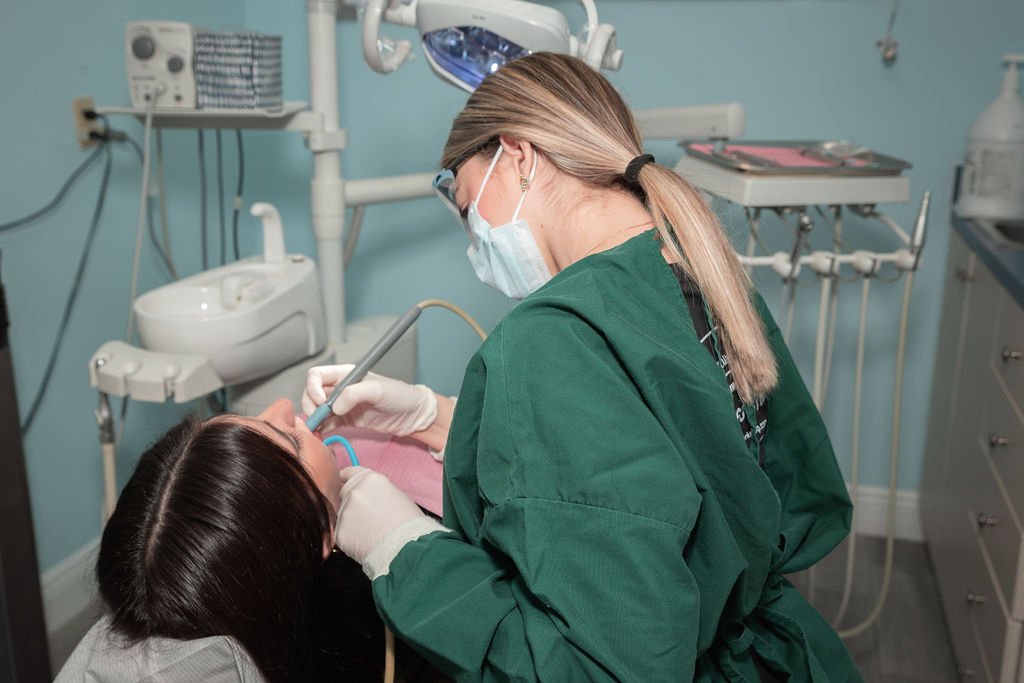 Non-surgical care first
Signs it’s time to have your gums checked
The American Academy of Periodontology lists these warning signs of gum disease. Many people have more than one and still feel no pain — gum disease is often silent until it’s advanced.
Source: American Academy of Periodontology — Gum Disease Information.
Gum disease is more common than most people think.
Source: NIH National Institute of Dental and Craniofacial Research, NHANES 2009–2014.
of U.S. adults 30 and older have periodontitis
of adults 65 and older have it
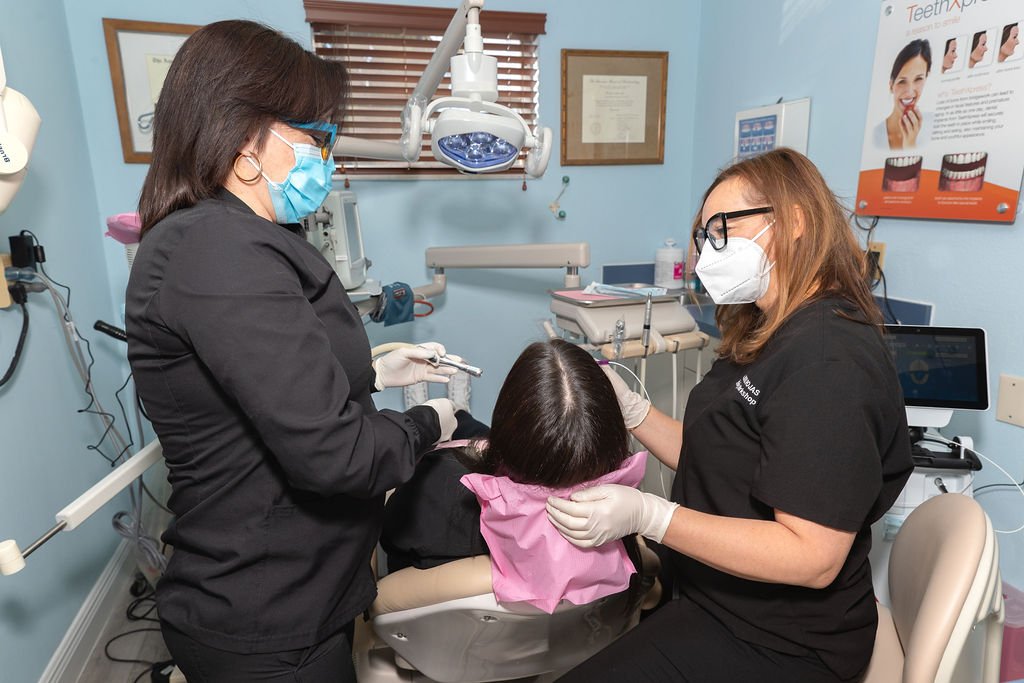
From diagnosis to healthy gums, step by step.
We chart the depth of the pocket around every tooth and review x-rays, so treatment is based on numbers — not guesswork.
Plaque and tartar are removed from below the gumline and the roots are smoothed so the gums can reattach. The area is numbed first, and sedation is available.
After the gums heal we measure again. According to the AAP, many patients need no further active treatment after scaling and root planing.
Pockets that stay deep may need LANAP® laser therapy or periodontal surgery and grafting to rebuild support.
Gum disease is controlled, not cured. Regular maintenance visits keep it from coming back — the AAP notes that most patients need ongoing maintenance.

Most people who sit in my chair for a gum evaluation are worried about two things: losing teeth, and pain. I take both seriously. I measure first, I show you exactly what I see, and I start with the gentlest treatment that can work. For a lot of patients that’s a careful deep cleaning and a solid home routine — nothing more.
If you’re nervous about dental work, tell us. I trained in IV and nitrous sedation specifically so anxious patients could get the care they’ve been putting off. Gum disease is easiest to control early, and you don’t have to go through it tense.
Dr. Tamara Rojas, D.M.D. · Board-Certified Periodontist · Read her background
Healthy gums protect more than your smile.
Periodontitis is the infection and inflammation of the tissue and bone that hold your teeth in place. Left alone, pockets deepen, bone is lost and teeth can loosen or fall out. Treating it early is usually simpler, more comfortable and less costly than rebuilding later with grafts or dental implants.
Research also links gum disease with other health conditions. The American Academy of Periodontology notes that people with diabetes are more likely to have gum disease and that several studies associate periodontal disease with heart disease — while also stating that a cause-and-effect relationship has not been conclusively established. If you have diabetes or heart disease, let us know at your visit so we can coordinate with your physician. (AAP: Gum Disease and Other Diseases)
Non-surgical therapy is the standard first step. The AAP describes scaling and root planing as a deep cleaning of the root surfaces below the gumline, followed by smoothing so bacteria are less likely to reattach. (AAP: Non-Surgical Treatments)
Treatment that fits your nerves and your budget.
Periodontal therapy questions
Is periodontal therapy the same as a deep cleaning?+
A deep cleaning (scaling and root planing) is usually the first step. Periodontal therapy is the whole plan: measuring your gums, the deep cleaning, re-checking how the gums healed, any laser or surgical care that is still needed, and the maintenance visits that keep gum disease under control.
Does scaling and root planing hurt?+
The area is numbed before we start, so most patients feel pressure rather than pain. If you are anxious, we offer nitrous oxide, oral sedation and IV sedation. Gums can be tender for a few days afterward.
How do I know if I need periodontal therapy?+
Bleeding, swollen or receding gums, loose teeth and bad breath that won’t go away are common signs. The only way to know for sure is to measure the pockets around your teeth, which takes a few minutes at your evaluation.
Will I need gum surgery?+
Not necessarily. The American Academy of Periodontology notes that many patients need no further treatment after scaling and root planing. Surgery or LANAP® laser therapy is considered only when pockets stay deep after the gums heal.
Can gum disease come back after treatment?+
Yes. Periodontitis is a chronic condition, so it is controlled rather than cured. Regular periodontal maintenance visits and good home care are what keep it from returning.
Does insurance cover periodontal therapy?+
Many dental plans include periodontal benefits. We accept most traditional insurance plans, verify your coverage, and file claims for you. Financing, CareCredit and our in-house dental plan are also available.
Bleeding gums? Let’s measure, not guess.
Book a gum evaluation with board-certified periodontist Dr. Tamara Rojas in Hollywood, FL. Tooth pain or swelling? See dental emergencies.
From Dr. Rojas’ blog
Gum Disease Stages and Treatment in Hollywood, FL: What You Need to Know in 2026
Dr. Tamara Rojas explains the 4 stages of gum disease and treatment options — including LANAP laser surgery — at Tooth Fairy…
Read the article →ArticleThe Importance of Periodontal Therapy
Periodontal therapy stops gum disease before it leads to tooth loss. Hollywood FL periodontist Dr. Tamara Rojas explains treatment options.
Read the article →ArticleReceding Gums: Causes, Symptoms, and Prevention
Receding gums expose tooth roots and signal gum disease. Hollywood FL periodontist Dr. Tamara Rojas explains causes, symptoms, and treatment.
Read the article →ServicesAll periodontal & implant services
Gum disease treatment, LANAP, dental implants, extractions, sedation and general dentistry in one place.
See all services →